
 In this article I will discuss:
- The anatomy of the Shoulder Blade (Scapula) and its purpose
- The biomechanics and function of the Scapula
- How Scapula dysfunction can lead to injury
- How to manage and prevent injuries
Anatomy of the Scapula’s
Here is a picture to refer to throughout this section:
http://www.erexam.org/wp-content/uploads/2015/01/Shoulder-posterior.png

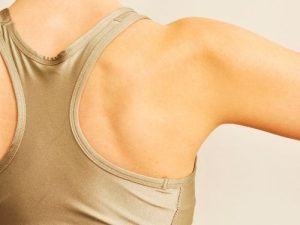
The Scapula’s are large flat triangular shaped bone’s located on the back of the body and are commonly known as the shoulder blades.
The Scapula’s also form part of the Acromioclavicular Joint’s and form the ‘Socket’s’ of the ball and socket joint’s in the shoulders, Gleno-Humeral Joints. (See Article 1: http://www.uttoxeter-chiropractic.co.uk/blog/shoulder-more-just-rotator-cuff-part-1)
The scapula’s therefore serve as important parts of several joints within the shoulder girdle and due to their large size act as a firm anchor point for many muscles.
Biomechanics and Function of the Scapula’s
The Scapula acts in the same way as the sail of a ship with all of the muscles which attach to it acting as the ropes to control it. If you lengthen or shorten any of the ropes (muscles) the sail (Scapula) will move and act differently. When a sail is moved to catch more wind, it is place under much more tension, if this tension is to large or applied for too long the sail or ropes can be damaged. This is exactly the same as the Scapula. If its position is changed by the muscles acting on it, and this position causes more stress on the muscles, then injury can occur throughout the shoulder.
The scapula has a different ‘optimal’ position dependant on where your arm and body is positioned. To ensure the scapula is in the correct position relative to your arm the body utilises a concept known as ‘Scapulohumeral Rhythm’ (Scapula-Arm movement relationship). This simply means that for a certain amount of arm movement, the scapula also moves a certain amount. For example if you move your arm 10° your scapula should move approximately 5°.
How Scapula Dysfunction Leads to Injury
As discussed above, if the scapula is moved into a position which creates increased tension on the muscles then injury can occur.
The Scapula is often moved into an incorrect position by dysfunction of the Scapulohumeral rhythm discussed above. This occurs due to weakness of certain muscles around the scapula, often due to poor posture in prolonged seated positions.
If you observe the image in the link below, you will see how the muscles which attach to the scapula also attach into the neck, shoulder and back. By altering Scapula rhythm and position, tension in the associate muscle is altered which shows how neck and back conditions can be affected by shoulder problems, and vice versa. http://www.webset-lms.com/vtct/Course.aspx?id=4984
How to manage and prevent injuries
As with any injuries it is advised that you have your condition checked out by an appropriate healthcare professional.
Rehabilitation is also advised alongside treatment to strengthen certain muscles that attached to the Scapula. The most common muscles that become weak are the Lower Trapezius and Serratus Anterior. These muscles are the ones effected mostly by poor seated posture with rounded shoulders.
Below are some exercises to begin rehabilitation to help manage and prevent Scapula dysfunction.
Brugger Relief Position:
https://www.youtube.com/watch?v=MyO80dyLajE
Lower Trapezius Exercises:
https://www.youtube.com/watch?v=wcb5MihCzAo
https://www.youtube.com/watch?v=BVehf-8FAxQ
Serratus Anterior Exercises:
https://www.youtube.com/watch?v=5C1M9ms20jI