
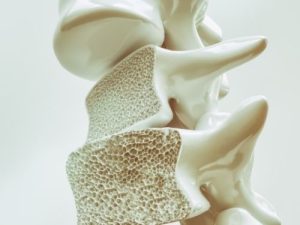
 In this article I intend to discuss:
- Anatomy of the disc
- What is a ‘slipped disc’
- Why and when discs are commonly injured
- Types of disc injury
Anatomy of the disc
Between each of the 24 articulating vertebrae of the spine is a disc. These discs acts as a shock absorber to cushion forces transmitted through the spine.
A disc is made of two parts and can be thought of like a jam doughnut. The jam in the middle is called the nucleus pulposus and acts to distribute forces evenly across the disc and spine. The dough is the annular fibrosis which is designed predominately to resist the forces of movement placed on the spine.
What is a ‘slipped disc’
A slipped disc is a ‘term’ used to suggest that a portion of the disc is out of position. Whilst in some respects this is true it is much more applicable to classify the type of disc injury as not all injury involve ‘movement’ of the disc and even the ones that do are completely separate from each other.
Why and when are discs commonly injured
Discs are most commonly injured between the ages of 20 and 30. This is because at this age your discs are fully of water and are very mobile and flexible meaning there are more likely to be stretched and injured. As you get older your discs dehydrate and become drier and firm, meaning there is less chance of them being damaged.
In our clinic the most common mode of disc injury is from twisting or bending and twisting. This is explained by the structure of the annular fibrosis. The annular fibrosis is made of alternating layers of ligamentous material which are each aligned in the opposite direction to the last.
When you twist only half of the fibres tighten in that direction meaning that only half of your disc is stabilising the spine. This is when injuries often occur.
These injuries are predisposed by poor posture, manual labour, repetitive bending, nutrition and other factors.
Types of disc damage
1. Radial Annular Tear
This happens when one of the layers of annular fibrosis begins to tear away from another or ‘delaminate.’ This often produces localised back pain. In this case the tear can also produce lots of localised inflammation which can irritate local nerve roots giving rise to leg pain. This is often why you can have leg pain without anything showing on an MRI scan as the disc itself is not bulging.
2. Disc Protrusion
A disc protrusion is the time of injury which is often referred to as a ‘slipped disc.’ This is where part of the nucleus pulposus begins to move away from the centre and causes a ‘bulge in the disc’ This is like pressing down on the jam donut and the jam moving away from where you are pressing. This type of disc lesion can cause leg pain by either inflaming the nerve root or by physically compressing it.
A disc can protrude in three ways:
• Posterior-lateral disc (the disc is bulging backwards and on the OUTSIDE of the nerve). This is the most common and least serious type of disc protrusion. They tend to respond favourably to conservative care.
• Posterior-Medial disc (the disc is again bulging backwards but is on the INSIDE of the nerve). This is less common than a posterior-lateral disc protrusion. This type of protrusion does not respond as well to conservative care
• Central disc protrusion (the disc is bulging straight backwards towards the spinal cord). This is much rarer than the other two types and is often referred to orthopaedic consultants.
Disc Extrusion:
This is when the protruding disc worsens and actually ruptures out of the annulus fibrosis. This is like biting into the jam doughnut and jam spurting out. This type of injury causes leg pain by direct compression of the nerve root. The injury follows the same sub categorisation as a disc protrusion. This is a lot less common than a normal protrusion. These types of disc injury are often referred for orthopaedic consultation
Disc Sequestration:
This is the most serious form of disc injury and is a progression from a disc extrusion. The extruded material (“the jam”) begins to fragment. Once identified these issues are often referred for orthopaedic consultation.
Andrew Smy (Chiropractor)